We were talking about PD experiences the other day and it inevitably turned to "What was the best PD you've ever been to?" Having never attended a TMC (and unable to go this summer...sad face) I reflected upon one of the more useful district supported PD days. We met a group of math teachers from another high school in the district. Prior to the meeting we were asked to write out a description of our best. It could be a lesson, a technique, an explanation. I honestly don't remember what I brought to the table, but it wasn't nearly as good as the stuff I got out of the day.
Below are quick descriptions of two review games that have been great of great use in the classroom for a tweak on an "quality, basic" problem set.
Equation Golf: Have a problem set of 15 problems that you want the whole class to do? Give students a goal, or a par. You want to get all of the correct answers to the problem set by calling on 18 people or less. (Numbers used are purely for illustrative purposes, you can have 20 problems and call on 26 people, just make the goal reasonably attainable). Have students work on the problem set for the desired amount of time. Individually, partners, groups, your call. At the end of the time, tell students that they must pay attention to play golf. Pick a student at random (Popsicle sticks, random # generator) and that student picks whichever problem they would like to answer. You verify or reject the answer. New person. Each person counts as a "stroke". Goal is to make par.
This helps work on listening skills as well. I always tell the students that they must pay attention to which answers have been given AND marked as correct. The students must announce the problem number first, then give their answer. This way, if a correct answer has been given for #3, and a student says "I'd like to answer #3, the answer is..." I can cut them off, let them know that that question has been answered correctly already and that counts as a stroke.
In the past, I had given an entire class grade for this activity. Usually a relatively small grade that didn't really affect the overall grade in the class, but enough to keep them interested. As I tried to move towards more standards based grading, I might make the change to allowing a student that answers correctly to use that as evidence of learning for a particular objective. This would have the added bonus of helping students to identify their own areas of need, work on that with students in the class during the class work portion, and trying to answer more difficult questions based on their individual needs.
Bluff: Take a similar problem set as Equation Golf but divide the class into two teams. Give one team a problem to complete (the other team should simultaneously complete the problem). On Team 1, after a certain time, ask anyone that feels that they have the correct answer to stand up. Someone from Team 2 picks a Team 1 member to answer. If it is correct, Team 1 gets a point for each person standing. If it is incorrect, Team 2 can steal the points. Then the next question goes to Team 2.
This game can be a bit touchy so you have to have a responsible group of kids that will be willing to put themselves out there. Class culture is extremely important to this game. I have seen times where students will continually pick on one person, so it is up to the teacher to ensure that the game stays positive. In cases like this, the teacher doing it was awesome (disclaimer, it was not me...though I am pretty awesome!) and when this situation arose, he turned it and made the kid a champ when he kept getting the questions correct.
A bit of strategy goes into the game as well. A team cannot call on the same person 2 turns in a row, so the last person called should always stand. I don't share this with kids, but it is fun to watch them figure it out. And a student can stand even if they do not think they have the right answer in an effort to increase the point value for their team (hence the name Bluff).
Showing posts with label Algebra 2. Show all posts
Showing posts with label Algebra 2. Show all posts
Friday, January 8, 2016

Sunday, October 25, 2015
Hurricane Sandy Project
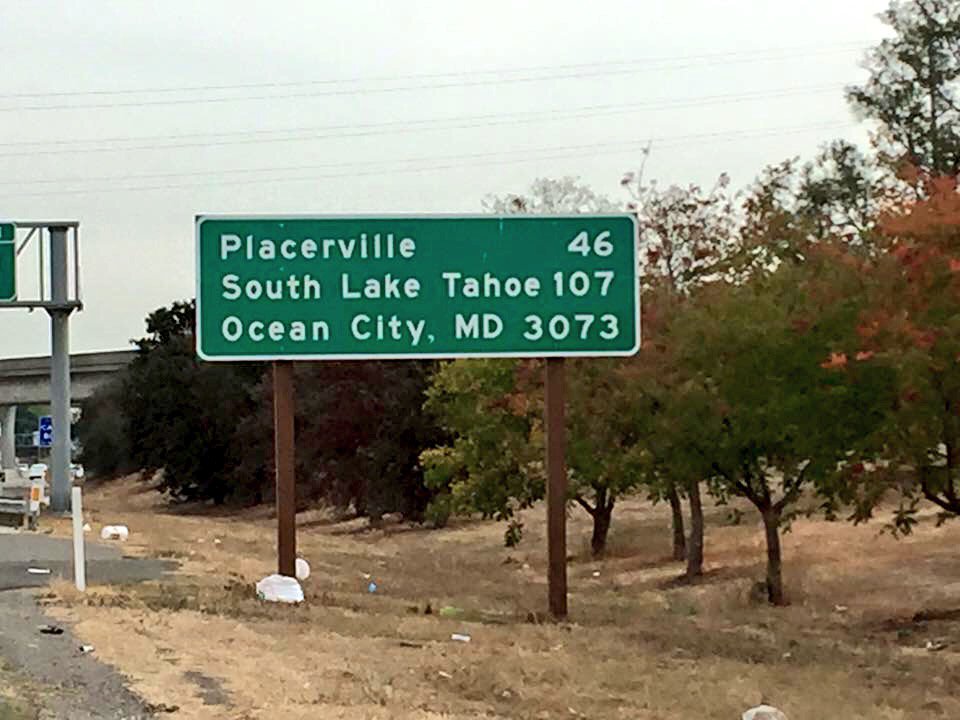
I was inspired today by both Robert Kaplinsky's urging of Joe Schwartz to blog about his math successes and by this Twitter conversation with Jen Silverman.
- "@Yummymath: Is there a math question or math task here? #mtbos #mahchat #elemchat #elemmathchat " @jensilvermath
- .@parkermathed @Yummymath Graph circles centered at those cities with the distances as radii & you can locate the sign. #mtbos #mathchat
- @parkermathed @Yummymath Practical issues: road dist or crow's flight? Curvature of Earth? Better w closer cities!
- Back in 2012, after Hurricane Sandy, I created a lesson for students to discover the distance formula from using the Pythagorean Theorem on the coordinate plane. It was a successful lesson by #MTBoS standards; low floor, high ceiling. Students were given a map with axes but no markings for intervals. The origin was Bel Air, MD where the school is and there were several cities marked on the map, including Atlantic City where Hurricane Sandy made landfall.
- The first question asked students to decide on coordinates for the cities listed. The given information had the distance from Bel Air to Atlantic City (90 miles East and 20 miles South), but with no markings on the map, students were initially at a loss.


- Many students started with Atlantic City as coordinates of (90, 20), some went with (90, -20), but then struggled to get the other cities. Some went right to a ruler but measured the direct distance from Bel Air to Atlantic City. There was A LOT of productive struggle as groups wrestled with the seemingly simple task of creating coordinates. Eventually, most groups got to the idea of measuring to make a coordinate plane. This is where things got interesting. Some of the groups decided to make the coordinates in the map distance. For example Atlantic City was (4.5, -1) since that was the distance on the map in centimeters. Other groups stuck with the actual distances of (90, -20). Both groups had to deal with converting the distances throughout the problem, though in different ways.
 Jen Silverman


The follow up questions involved deciding if certain cities felt hurricane force winds or just tropical storm force winds. This is where students were to discover/use the distance formula to determine if the cities were within the range to feel certain winds. Students that used the map distances for coordinates had to account for that in their checking process. It led to some great discussions about units.
At the bottom of the page, students were asked to create a general statement about what it takes for a city to have felt hurricane force winds. I had to do some clarifying and next time would ask students to make a rule for a city with coordinates of (x,y). This would help clarify the expectation that I want a symbolic statement comparing (c,y) to (90, -20) and the required 80 mile mark. Students that were able to handle this extra task discussed the use of square roots, inequalities, and variable coordinates to represent an infinite number of solutions.
On the map, students were asked to color the area that was affected by hurricane winds and the area affected by tropical storm force winds. With some prompting, students were able to draw the required circular sections. We then connected the visual to the inequality for a rich discussion. Overall, one of my more successful lessons because of the depth of the task, the ability to conceptualize their own coordinates (either in miles or cm) and the representation of a "real-world" problem through instances, inequalities and graphs.
Monday, November 24, 2014
Quadratics Intro
We are starting quadratics in Algebra II. I had groups of 4 work on a problem about
putting a walkway around a pool and trying to find the maximum possible width
of the walkway, given that the total area need to be less than a certain
amount.

While this has been a successful task for several years, I am very curious as to why it always elicits a good deal of success. These are some of my thoughts.
While this has been a successful task for several years, I am very curious as to why it always elicits a good deal of success. These are some of my thoughts.
- There are several ways to approach a solution. Students feel comfortable trying things out because I reinforce this idea at the beginning of the task. I do not tell them if a method is right or wrong, but instead wait until they get an answer using their method, then ask if they can check to see if that answer makes sense.
- The content that students are focused on is area of rectangles, which many feel very confident with. The variable does add a wrinkle, but their confidence for areas of a rectangle is exceptionally high compared with other areas of math.
- The problem is challenging, but not beyond their reach. This ties in with the confidence. As soon as they know they are finding areas of rectangles, they know that they will be able to find the solution. Knowing that they understand the “basic math” of the situation, they stick with it, even though the content I’m focused on in writing quadratic equations.
I was very happy with the way the conversations were turning
out. Students tried various
methods. Some started with finding an
expression for the total area, then abandoned that idea to break it up into
smaller rectangles, to then go back to the total area expression to check their
proposed solutions. They also were never
satisfied with the guess and check method for solving their equations once they
solved them.
This lesson is also one of my go-to arguments for teaching
in the style that I do. Every group in
every section of my Algebra II class was able to set up a quadratic equation
that would lead them to the solution to this problem. None of the groups was able to recognize that
the way to solve the equation was to use the quadratic formula, even though the
vast majority of them have heard it and used it before. I truly believe that one of the most
fundamental aspects of teaching Algebra is teaching students when to use a given tool as much as it
is how to use that tool. I think recognizing when a tool such as the
quadratic formula may be useful is just as, if not more important, than working
through the maze laid out by the order of operations in calculating solutions
using this tool.
We left class with students wanting to find a more efficient way to solve their equations. I told them that we’d be learning it in
future classes, but did not explicitly link it to the quadratic formula just
yet. I’m hoping they’ll be able to discover
that for themselves, but this was a nice activity for introducing the unit and
will make a great reference point for other lessons on this topic.
Absolute Value Inequalities & Price Is Right
I’ve been searching for a real-world scenario where absolute
value is involved, specifically where there are operations outside the absolute
value bars. This year I found it! My wife and I love playing guessing games,
often going with “Price is Right” rules, where a guess over the actual amount
is disqualified. These are the standard
“Price is Right” rules, with one exception.
At times, they play a game called “Cliffhanger”. The object of the game is to guess the price
of three items. For each dollar you are
off, the cliffhanger moves up the mountain.
After each item is revealed, a guess is given, the cliffhanger moves,
and the actual price of the item is revealed.
If the cliffhanger moves more than 25 spaces at any point, he falls off
the cliff and the contestant loses.
In class we watched this clip https://ww.youtube.com/watch?v=HjT7bSHAHAU until right before Walter
makes his guess. I asked students to
make a guess of their own, which they entered into a Google spreadsheet. We watched Walter guess, and then watched the
cliffhanger move. We stopped the video
before the actual price of the coffee maker was revealed. I asked students “What do you know about the
actual cost of coffee maker?” Many
students decided that the price must be less than $50. I let them all mull that over for a minute or
two and eventually a student said that it could have been more than $80 as
well.
We watched the end of the video, where the price of the
coffee maker is revealed. We then
revisited our guesses. I had students
copy and paste the list of guesses into Excel so they could all work
independently. I asked them to create a
second column in their spreadsheet which would represent the number of steps
that the cliffhanger would move based on the guess. We then generalized their process. Some students worked through a piecewise
process, treating the arithmetic differently if the guess was more or less than
45. Others did the same arithmetic every
time and “dropped the negative”. They
highlighted all of their peers that would have won the prize based on their
guess for the last item. We discussed
how there were many possibilities and what this meant about the type of problem
we were trying to solve. Students made
connection to inequalities and absolute value as it relates to distance.
At this point, we graphed the guesses compared to the steps
that the cliffhanger moved. We discussed
where the vertex of the graph was and why it would occur there. We also discussed slope. Graphically we highlighted the portion of the
graph that represented winning guesses versus non-winning guesses, connecting
this with the one-dimensional number line representation of the solutions to
the corresponding absolute value inequality.
This time around, I focused on the inequality lx – 45l <
15, but next year, I will definitely
focus on the game as a whole. The
purpose of the game is to have the cliffhanger move no more than 25 total
spots. Including this with the Walter
video, we could focus on the slightly more complicated inequality of 10 + lx –
45l < 25. This shift would
help students to realize the process for when you should “split” an absolute
value expression. Mentally, the students
(and I) had already had this step cemented in their heads, but bringing it to
the forefront may help with some misconceptions down the line. Reinforcing what students are already doing with the symbolic manipulation to back it up will help students develop their abstract and quantitative reasoning.
Thursday, August 7, 2014
1st Day Activity
Got a great idea at camp today. Have students sit back-to-back and create a drawing. 1st round, they describe their drawing to a partner. The partner may not ask questions and needs to replicate the drawing. 2nd round, the partner may ask yes or no questions, but that is the only communication. 3rd round, full out conversation. Then they discuss when it was easiest, which drawings looked the most alike. This was a great introduction to teamwork and communication. It works on SMP#6 attending to precision, as students must give precise directions to have any chance at having the drawings look the same. This will also be a great intro in Geometry where precise definitions become so important.
Discussion led to when you might use this in your life, what portion was easiest, how we could improve our replications...overall really good.
This may be my first day activity for this year. I also would love to use it when we start talking similar and congruent figures. We can use tools to increase our precision, maybe even limit the number of clues in an effort to discover the triangle congruence and similarity theorems!
Discussion led to when you might use this in your life, what portion was easiest, how we could improve our replications...overall really good.
This may be my first day activity for this year. I also would love to use it when we start talking similar and congruent figures. We can use tools to increase our precision, maybe even limit the number of clues in an effort to discover the triangle congruence and similarity theorems!
Subscribe to:
Posts (Atom)