Saturday, March 14, 2026

Building Number Sense

How do we teach grade level standards for students that need support with their number sense? When students are learning new content, using mental math, visuals, and manipulatives provide opportunities to deepen their understanding of numbers by thinking through a new context. Take these examples of using double number lines to work with percent increase and decrease from Illustrative Mathematics Grade 7 Unit 4 Lesson 7.

Last year, scientists counted 12 foxes in a conservation area. This year, they counted 50% more than that. How many foxes did they count this year? A double number line labeled number of foxes, 0, and a second number line labeled 05, 50%, 100%, 150%


Students have to first label the tick mark above 100% with 12, which is covered in previous lessons. As a second step, students need to see that 12 divided into two equal intervals. How do we support students that may struggle with determining the first tick mark should be 6? First, we have to acknowledge that there are several ways to arrive at the answer, listed below in order of a predictable progression of learning about division as an operation:
  1. Skip counting
  2. Multiplication facts (knowing that 6 times 2 is 12)
  3. Division
Students that are skip counting, may start by using guess and check, and while a calculator or multiplication chart may support the calculation, it may not support the building of number sense. Instead, a number line with every integer between 0 and 12 or 12 counters, can help students see the idea of equality inherent in the partitioning of the double number line. To strengthen number sense, relating back to the fundamental understanding of the operation is paramount. Sharing these strategies for labeling the 6 (and eventually the 18) in the order above allows for students to see connections between their strategy and the next strategy on the progression of learning. Teachers can draw connections between skip counting and multiplication to provide a bridge so skip counting students can try a new strategy in subsequent problems, and similarly draw connections to the process of division. There's also a potential to connect to a calculation with fractions in:
Question 2:

After replacing some grass with rocks, a business decreased its water usage by 20%. If their old water usage was 15,000 gallons per week, how much do they use now? A double number line with the top line labeled water usage (gallons) with the initial tick mark labeled 0 and the sixth tick mark labeled fifteen thousand; the bottom number line labeled 0%, 20%, 40%, 60%, 80%, 100%, 120%

For the second question, students may again try to find a number to skip count or add by to reach 15,000. After some trial and error, they'll likely land correctly on 3,000. Some students may leverage the structure (SMP 7) to think about a number that 5 times will give 15,000. This offers the opportunity to again revisit division as an idea of equal groups or equal sized jumps on a number line, as well as discussions about how powers of ten, in this case thousands, can be as easy to skip count by as their single digit counterparts. 

One of the learning targets is "Interpret a description of a situation to identify the original amount, the new amount, the change, and corresponding percentages. Label these on a double number line diagram". Some may view calculation difficulties as a barrier to achieving this outcome, but if we frame these difficulties as an opportunity to build number sense, the accumulation of these opportunities over the course of a year can have an outsized impact on student's future abilities to work flexibly with numbers. 


Monday, February 11, 2019

Evolution of a Lesson

It started at our Department Chair meeting.  DCs had time to work together to plan a lesson together.  One group called me over because they were looking for ways to get students to understand two-variable inequalities.  Some of the specific difficulties were that students were having difficulty deciding what 0 < 2 implied about the graph and also trouble understanding WHY the graph of a inequality was shaded.  I suggested that a thin context may help students with reasoning through these two pieces, which quickly turned to assessing learning about the topic through Desmos.  My colleague Ellen took the reigns and said she would create an activity to send out.  The context was about buying canned juice ($0.75 each) and fries ($1.25 each) for a budget of $20.  Below is a screen shot from our first attempt (initial activity here; final product here):


I was pumped to have such amazing colleagues working together to create an engaging and thoughtful product for our kids...I also looooooove Desmos.  With the Desmos activity as a start, Chris Wright (@cwright4math) and I got to work.  We bounced a lot of ideas back and forth about what it was that we wanted the activity to do.  We decided that we wanted students to be able to pick points for the inequality and have them get feedback about whether their points were solutions or not.  Then, using the overlay feature, allows students to take a look at the pattern that was created.  We spent time learning how to code Desmos Computation Layer, eventually getting what we were looking for and sending it back out to our teachers. Here's the slide that took the most time learning, but created the most feedback from our teachers and students:


This is some of the feedback we got from the implementation:

"One of my GT 7 teachers did this lesson today. I had the opportunity to watch the students work through the Desmos activity. It was well received and worked well.

I would recommend having the class discuss some of the slides as a whole group before letting them move on to the next part.

One of the students also asked if we could change the colors. He didn’t like that the shaded area was red which showed correct answers and the points outside the shaded area were also red showing incorrect answers. He wanted all the correct answers to be the same color.

I LOVED the slide with the adjustable points. It was so cool when the message popped up to say if the point they selected was correct or not. I need to learn how to make this type of slide."

So back to work with some more CL.  We learned how to aggregate the student responses so that students could interact with their classmates' answers.  A big moment for us was defining what exactly the learning target was for our students.  This conversation had started with a desire to get students to graph linear inequalities, but as the activity evolved the purpose became clearer too.  We landed on "Students will make connections between individual solutions (ordered pairs) to a two variable inequality and the visual representation showing the solution set to the inequality by using a budget".  This new target was about creating an understanding about the connection between the symbolic and graphic representations, a fundamental precursor to graphing inequalities.  As a community we dove deep into the learning progression that takes place for the new learning of graphing 2-variable inequalities.

With this clearer conception of what we wanted students to know and be able to do, we got to the next step.  We want students to recognize that there is a line that divides the plane into solutions and non-solutions, so we put in this slide (this is the overlay, which reveals a lot of great student thinking - the conversations when students saw some of the solutions was great!):


We also wanted students to be able to tell if an ordered pair is a solution without substitution.  We changed to card sort so that instead of the symbolic inequality, we provided the graph so that students could build the connection between the solution set and the graph.


Collaboration and feedback (from students and teachers alike) was crucial to improving this activity.  Equally important was having a very clear learning goal for the task.  Thankfully, this goal became clear for us early in the process.  I'm grateful to have wonderful colleagues willing to try new things who have created cultures in their classrooms where their students are willing to provide honest feedback.  Here is a link to our final product.

Tuesday, January 29, 2019

Listening & Assumptions

K and I were walking in town and she asked, "Will I ever be as tall as you?"
JACKPOT!
I let her know that unfortunately, my height is on the decline :) and asked, "If you keep getting taller and I keep getting shorter, will we have to eventually be the same height?"
I was hoping to get into a conversation about systems, slopes, and ways to solve equations with variables on both sides.  Instead, I got schooled on assumptions...
K: "No we won't have to be the same height"
Me: "How can that be possible? Won't we eventually have to be the same height if you get taller all of the time and I get shorter?"
K: "What if I get 1 inch taller next year, then a half inch taller, then a quarter inch taller, then one one hundredth of inch and one one millionth of an inch?"
I was so caught up in my thoughts of linear systems, I got crushed by an 8 year old on thinking outside the box.  I'm so glad that I listened to what she said!

Tuesday, September 18, 2018

Listening

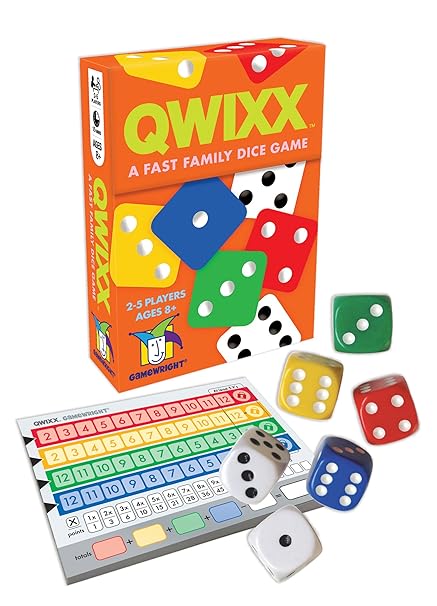
If you love board games I can't recommend Qwixx enough.  It's got some chance, some strategy and lots of math!
Image result for qwixx
Without getting too much into game rules or strategies, it will be enough to know that a 7 on your first role (summing a white and any other die) is bad.

K: "What are the chances that you get a 7 on the first role?"

I'm super excited that she's even asking a probability related question, though I immediately recognize this would be a really tough one to answer.

Me: "Well first we have to know how many different outcomes are possible and then decide how many of them have 7s in them.  I think there are going to be some pretty big numbers.  Can we figure out how many outcomes there are first?"

K: "Sure"

Me: "Any thoughts on how many outcomes there are for six dice?"

K: "No."

Me: "How about 1 die?"

K: "6"

Me: "How about 2 dice?"

K: "11"

Me: "How did you get that?"

K: "Is it right?"

Quick aside here.  For years of our mathematical conversations, I haven't been telling K if her answers are right or wrong until after she answers "How did you get that?".  Lately I've dropped the question for arithmetic that I'm confident that she's mastered.  I almost said, no, but thankfully, this time I told her that I wanted her to explain where she got 11 from.

K: "Well you could roll a 2, a 3, a 4 and so on up to a 12. So there are 11 possibilities"

I'm so glad that I took a moment to ask where she got 11 from.  Based on her understanding of the word outcome and the types of questions she was asking 11, makes total sense. 

We continued to talk about how many outcomes there were for 2 dice, which had me acknowledging her answer as correct and offering another, different definition related to the actual dice as opposed to just their sum.  Then we did lots of thinking and listing, eventually working up to a general formula and an answer to how many outcomes exist for 6 dice.  We did not however answer the original question, but that's OK too!


Monday, June 25, 2018

Responsive Instruction in Math Class

Last week, I facilitated a session on responsive instruction in the math classroom.  The structure of the session was to start with a Which One Doesn't Belong, because we always have to start with some math. 
A little twist on this classic, I asked my participants to explain their choice via a creative response in goformative.com without using any words.  Here are some of the responses:

In these two responses, we made the connection between opening up and down and the coefficient of the x^2 term.


These two examples gave us an opportunity to talk about x-intercepts, as well as some representational limitations, with the quadrant picture highlighting that even though we can't see it in the picture, that the top right graph will eventually be in quadrant 2 as well as quadrant 1.  


After we discussed our WODB answers, we got in groups to get to the heart of the session.  Groups were asked to highlight areas that are consistently troublesome for students.  Part of my responsive instruction was to anticipate participant responses, so I guessed that fractions and signed arithmetic would be two areas that were common problems.  Sure enough, my participants agreed, adding also some trouble with creating and solving equations.

Our goal was to highlight trouble areas and come up with ways to help students before, during and after instruction.  The desired outcome was to go back to GoFormative and draw a representation of how to teach the topics with responsive instruction in mind.  To accomplish this, I provided participants with some resources to research their anticipated trouble spots.  We used the Progressions Documents and Nix The Tricks

The discussions that ensued with participants started to really blow me away.  Participants went back and forth between the Progressions and Nix The Tricks.  Questions surrounding signed arithmetic started popping up.  Teachers found a lot of usefulness in representing the number line vertically, thinking it would be more intuitive for their students.  Then came a struggle with how to use the number line to represent subtracting a negative.  Here I pivoted the conversation to the order of operations and how students make sense of that.  I referred participants to the PEMDAS section of Nix the Tricks.  We talked about the advantages of switching to GEMA and getting students to understand the definition of subtraction as adding opposites.  I was truly impressed by my participants openness and willingness to engage with these new thoughts on classic topics.  As we debated the merits of the two approaches, we also incorporated the other aspects of GEMA: the lack of division, the idea that we don't need to go left to right (and by extension the commutative and associative properties), the broader aspect of Grouping symbols versus Parentheses, and the connection to inputs in the calculator.  Here are some responses to this activity:


 Working with my colleagues, seeing their excitement about some new approaches, has really invigorated me at the beginning of this summer, and I can't wait to check in with them during the school year to hear how these approaches are going!

Monday, January 8, 2018

Permutations Of Minions

We’re getting ready for my daughter’s Minion themed birthday party.  She’s turning 8.  Where does the time go?  Since we had a snow day today, we were all home during the day and making preparations.  My wife made the poster below.


Kayla couldn’t figure out which minion was which.  She kept saying their names in different orders.
“Kevin, Stuart, Bob”
“Bob, Kevin, Stuart”
Not expecting much conversation I asked how many ways the three could be arranged.  Without shying away from the challenge, she sat and thought for a minute.  Deciding she needed to write down her thinking, she got some paper and made the lists below before confidently announcing her answer of 6.


I praised her for both showing her thinking and the organization of her method.  She had been stating aloud, “well there are 2 ways that they could stand with Kevin in front, then there are two ways that they could stand with Bob in front, and then there are 2 ways that they can stand with Kevin in front”.
Curious how far I could I push, I asked her about including another minion, Dave.  She struggled more with this one, initially listing 17 possibilities.  When I told her that she missed some possibilities, instead of going back to her list, she surprised me by trying to go into some arithmetic.  She started with a “4 times 3 times 4….48”.  I asked her how she got that and she started explaining that there are 4 minions and then you multiply by 3 because there are three left, but she couldn’t explain where the other 4 was from.

She revised her thinking to just the 4 times 3, but then realized that she had already created more than 12 possibilities.  I asked her what she knew about arranging 3 minions.  She said she knew there were 6 ways to do it.  I asked what happens when we add another minion.  She connected the dots and was able to realize that there would be 4 times 6 possibilities for arranging 4 minions, where the 4 was “the number of minions that could be first and 6 was the number of ways that the other 3 could be lined up”. 

To build on the momentum, I asked about adding a fifth minion, Jerry.  Here she struggled again, so my wife asked her what patterns she noticed.  We started listing the ways to line up 2 minions, then 3, then 4.  Kayla recognized the recursive nature of the pattern that a 5th minion would mean 5 times as many possibilities as 4 minions, so she set to work on multiplying 5 by 24, which was immediately followed by 6 times 120, at which point her desire to do multiplication stopped.


My wife then gave Kayla a brief explanation about what a factorial is, how to calculate it and how to represent it.


Besides being ridiculously excited that I could bring Kayla into this conversation, I reflected that this is exactly the type of You do, We do, I do model of teaching that I espoused in my Ignite talk

You Do – Kayla had a prompt about lining up minions and wrestled with the task with no input from me.

We Do – In the extension problems of 4 and 5 minions, my wife and I asked Kayla questions to understand her thinking and refine her thought process.  By asking about the origins of the values in her arithmetic, she was able to independently identify flaws in her reasoning.  Some direct guidance was also provided.  I told her 17 was not correct, but didn’t offer any additional strategies.

I Do – Once a pattern was identified, Kayla was in a place where she could attach some new vocabulary (factorial) to an experience.

Thursday, December 14, 2017

I gave an Ignite

My nightmare came true!  I was asked to give an Ignite speech in front of all the middle school principals and instructional coaches.  Despite being in front of children all day and frequently presenting to staff at my school, public speaking is one of my…least comfortable areas.  I was free to choose any topic, but the theme of the meetings is “I used to…, but now I…”.

I was asked to present by my coach and resource teacher.  Her confidence in my ability and her consistent support made it possible for me to overcome my discomfort.  After my initial reluctance, I accepted and had to pick a topic.  After reaching out to my coaching colleagues, I landed on math and coaching.  Initially I made a presentation that came off as very preachy.  I’ve come by some hard-earned wisdom about math pedagogy that I thought I could share with instructional leaders in a way that would empower them to feel confident with discussing math pedagogy.  What I found instead was that by sharing my personal journey, I could accomplish the same goal in a way that may be more well received.  I’ve made a lot of poor choices throughout my career, but have tried hard to learn from themActing as if I’ve never (or don’t still) givea worksheet to practice skills is counterproductive to a true narrative and a realistic vision of math education.   

An underlying push in this talk is the influence of the #MTBoS (the Math Twitter Blog-O-Sphere, an online community of math educators) on my teaching, personal and professional growth.  Many of the techniques were either acquired directly from this group of amazing people, or, at the very least, I discovered I was not alone in my findings about how students learn math best, reassuring me that my techniques were following a good path.


While the talk may not be as inspiring as Annie Fetter’s Notice &Wonder or DanMeyer’s Math Class Needs a Makeover, I was happy to be able to share my journey with my district and am hopeful that it carries some positive influence and change behind it.  I am also so thankful to have so many people, both in real life and on the internet to both challenge and support me.  I’m a lucky guy!

Thursday, October 5, 2017

Every Letter Has An Opposite

K: "Poppa, what's the opposite of 1 million?"
Me: "What do you think it is?"
K: (thinks for 10 seconds or so) "Negative 1 million?"
Me: "Right.  What does opposite mean?"
K: "You just flip it around....what's the opposite of 'c'?"
Me: (confused, but somewhat excited that we may be talking algebra!) "Hmmm...what do you think?"
K: "x"
Me: "How is that opposite?"
K: "a, b, c, so z, y, x"
Me: "I never really though about opposites of letters."
K: "Every letter has an opposite."
Me: "Does every number have an opposite?"
K: "Yes...(long pause) except there's one number that doesn't."
Me: (intrigued) "What number?"
K: "Zero...unless you count zero."

After I grabbed some paper to write down this deliriously wonderful conversation, I asked some follow up questions:

Me: "What's the opposite of x?"
K: "c...is that right?"
Me: "I guess that depends.  What would you say is the opposite of a?"
K: "z"
Me: "What would you say is the opposite of z?"
K: "a"
Me: "So what is the opposite of x?"
K: "Oh, it has to be c. Opposites come in pairs"

I love these conversations!  I never would have thought that the opposite of c was x!

Friday, August 11, 2017

Geometry & Trig & Coherence

The year I taught Geometry and Trig in the same year, I probably learned the most I ever have about vertical coherence (across grades rather than within a course/grade).  There were so many connections.

For example, we spend so much time in Geometry working with congruent triangles, so much time proving triangles congruent.  This proof process is important for truly understanding the unit circle definitions of the trig ratios.  When I taught Trig previously, not at the same time as Geometry, I would always just have students tell me that two triangles in a unit circle were congruent, but we never took the time to explain truly WHY the triangles were congruent.  Understanding why the reference triangle for a 120 degree triangle and a 60 degree triangle are congruent is a powerful tool.  Students could tell me that the triangles were congruent, but not how they knew.  None of them made the connection to the triangle congruence that they all spent so much time with in Geometry.

This coherence is a two-way street.  In Geometry class, we need to spend more time on topics and items that will likely enhance understanding in later classes.  Instead of doing a bunch of congruent triangle proofs like this...

to proofs of things that will help their conceptual development later like this....

I'm not saying we need to abandon problems like #2, but rather shift the balance.  Most books and curricula that I've seen have put a heavy focus on triangle congruence like #2 that will not likely show up again for many HS math students.  If we shift the balance to do the majority of problems that students will likely encounter in their future, we will help enrich their comprehension when dealing with more sophisticated math.  

Conversely, in Trig, we need to make sure that we are spending the time to go through the proof of why sin(Θ) = -sin(180 + Î˜).  Using problem #4 above, we can help students make the explicit connection of why this identity MUST be true, even when we don't know the value of Θ.

There was another area where I saw this overlap, and again, was underutilized in the Geometry class, which was Translation Symmetry or Frieze Patterns.  We spend a lot of time on reflection and rotation symmetry, but not so much on translation symmetry.  We also spend much of this time on 2-D shapes and next to none on applying this to functions.  It is really no wonder why students struggle with even and odd symmetries, as well as periodicity, in Trig when they are asked to apply symmetry to functions for the first time, while at the same time learning about trig functions.

Look at this example from my class several years ago


While the definition is good, all of the examples are 2-D shapes, no graphs.  Adding a parabola, absolute value, or cosine graph would help students understand that this definition applies to graphing as well as 2-D shapes.  The connections between algebra and geometry can be strengthened by figuring out WHY parabolas are symmetric.  

Students were then asked to calculate values for x equal distances to the right and left of the min/max x-value.  They began to notice relationships, were asked to explain those relationships, then connect to the symmetry of the graphs.  

In my opinion, this is much better than marrying algebra and geometry in the traditional sense, i.e., "a segment has length 2x - 5 and the distance from its midpoint to its endpoint is 3x - 10, find the length of the segment".

One of my goals this year will be to see where else in our curriculum we can focus on coherence throughout the grades and courses.  I'd love more ideas on where we can strengthen the coherence of our curriculum, especially in high school where the connections can frequently get lost between the courses.

Tuesday, July 25, 2017

The #MTBoS Reach

Doing some curriculum work this summer and I had an amazing experience.  Besides learning in-depth about sixth grade standards and their role in the larger picture of secondary math, I gained a new perspective on how the #MTBoS is starting to influence the mainstream of math education.   Our charge was to help write learning progressions, complete with resources for teachers to use to help them move their students through though progressions to fully understanding the standards.

After our first day, we gathered to compile a list of common resources.  I was excited to see Illustrative Mathematics as a common response.  It was also exciting to hear people in our math office discussing Desmos, Andrew Stadel, Graham Fletcher and Annie Fetter.  We had some amazing discussions about the intent of the standards and making sure that we are progressing through them to help students truly understand the mathematics that they are doing, not just cranking through rote procedures.

I've been following the Twitter conversation recently about the direction of the #MTBoS.  It's interesting to see the evolution of a place that has helped me implement a lot of the changes that I wanted to occur in my class, but struggled to find the support and resources to pull off.  This collection of people has produced some amazing resources that are directly in line with my view of what math and math education are all about.  I moved out of the classroom a year after I discovered this wonderful community, and have since struggled with my place in it.  My (infrequent) blogging has centered around the place I do most of my math, which is at home.  Professionally, I find it tougher to find relevant work to blog about.

Then this came across my Twitter feed.
Leeanne helped me to more clearly define my post-classroom #MTBoS self.  A "redistibutor of others cool ideas."

This came after an incident in the previous week, where two teachers I was working with were discussing how much they love Desmos: Polygraph.  I am preparing a PD for our math office when we get back to school in August and was curious because this was a resource that I was planning on incorporating.  I asked them where they had first found out about it and it turns out it was from teachers that had attended a smaller version of the PD I'll be presenting in August.

So now, here I am, redistributor of others cool ideas.  Hopefully, the #MTBoS will keep them coming!

Thursday, February 9, 2017

Chocolate Percentages

"Something's wrong with the label Poppa."
"What do you mean, dear?"
"The percents add up to more than 100."
She was absolutely right...the percentages do not add to 100.  We have talked a lot about percentages, using them frequently in context, whether it was adding a tip, getting a discount or knowing how much battery life her iPod has.  It is this last context that provided the frame of mind surrounding the devastating 100%.

Her comments opened the door to what a percentage is...a ratio.  What she was confused about was what the units of that ratio were.
"What is the Vitamin C 15% of?".
"The whole thing?"
"What whole thing?"
"The whole container of chocolate milk."...jackpot!
"I think you're right.  If that's what the 15% means, the label couldn't possibly be right; that's too much stuff!"
"So the label's wrong?"
"Not quite.  The 15% is comparing the amount of Vitamin C in a serving of chocolate milk to the amount of Vitamin C that you need each day."
"Oh."
"What questions do you have?"
"So that's why they don't have to add up to 100?  Because each one is only used for itself?"
"Yep."

Definitely going to have to come back to this one, but love that she is initiating conversations!

Multiple Subtraction Methods

My daughter is in 2nd grade and is currently learning about 2-digit subtraction.  It’s a skill we’ve been working on for a while, though I have very carefully stayed away from the standard algorithm.  During the last year, we’ve only talked about it in contexts, talking about time (friends are coming over at 3:30, it’s now 3:12), talking about sports (Duke has 54 points, UNC has 36….we’re winning by 18!), or any other place where math works its way into our lives.  Her preferred method is usually adding on in chunks, for example, 36 plus 4 is 40, plus 10 is 50, plus another 4 is 54, so Duke is up by 18.

Her elementary school uses a program that seems similar to Number Talks (if you haven’t read it, it is pretty much essential reading for elementary math!) in the sense that it promotes a variety of ways of attacking 2-digit subtraction.  Each day, she is explicitly taught a new method, then brings home homework to practice that particular method. 


Initially, I was displeased.  My daughter was able to follow the new procedures, but had difficulty explaining why they worked (my addition to the nightly homework assignments).  It seemed as though she was learning multiple algorithms for 2-digit subtraction without a regard as to why each of them work.  Disclaimer, I am not in the classroom with her, so I’m not entirely sure of the instruction surrounding this work.  I have the feeling that during class there is some explanation of why these methods work using a number line based on a few HW problems that I have seen, but it hasn't been sufficient enough for her to explain it to me, my ultimate litmus test.  

Number Talks changed my opinion...slightly.  Part of the joy of having a number talk with a class is not only seeing another way to solve a problem, but trying to make sense of someone else's method.  This is what helps improve flexibility when problem solving.  Understanding multiple methods to arrive at a solution allows you to add those methods to your repertoire.  The downside is that some of her assessments still "force" her to use methods that she may not have chosen on her own.  Indeed, this seems to be at the root of many of the anti-common core posts that have been circulated.  

I'm all for increasing mathematical flexibility, but I feel like just giving kids a bunch of algorithms and one day to digest them is not helping the flexibility.  Then I ran across this post by @TAnnalet.  It's pretty awesome!  I'm so glad to have people share their reflections and learning!  I love that students are learning multiple methods, but also are learning to create and test arguments.  That is the joy of mathematics and that will stick with these young mathematicians for a long time.

Wednesday, August 24, 2016

Priorities


John Stevens' tweets (above) got me thinking and primed for day one back.   This summer has made me think a great deal about what is important to teach our children.   So far none of the truly important had anything to do with content. A brief list:
1. Understanding and acceptance of all people
2. Respect for authority
3. How to highlight and rectify injustice
4. Respect oneself
5. How to debate an issue without resorting to character defamation
6. How to value someone else's argument even if you disagree
7. How to compromise
8. Critically interpret information and data

As I write this list, I can't help but be reminded of Robert Fulgram's All I Really Need To Know I Learned In Kindergarten.   In it, he creates a short list of everything people need to know to make the world's a better place. As a parent, I've tried hard to instill these characteristics in my child.  There's always room to improve.

Just a reminder to myself that as we enter the school each day, these are the priorities.  Curriculum should be supplied to support the goals of raising critical, involved, and educated citizens.  We also desperately need more role models that can highlight these virtues.

Wednesday, May 4, 2016

Memory

There's an app on my phone that is a game of memory with 16 cards.  Each cars has a point value.  When you pair, the points go in your bank which can then be redeemed for free items.  Pretty sweet deal!
You can miss four pairs.  On the fifth miss, the game is over.  Being a super nerd, I'm working on figuring out both the probability of clearing the board (matching all 8 pairs before having 5 misses) and the expected value of a play.
The 5 plays accumulate over time.  Last night at dinner I introduced the game to a colleague, who started with 4 plays.  I advised him to wait for the fifth play but grew played any way.  He lost. No points.    It got me thinking of the big difference between 4 and 5 plays, as well as the difference between 5 and 6 plays.  At 4 plays, you are guaranteed nothing, at 5 plays you are guaranteed only a single pair and at 6 you are guaranteed to clear the board.  Someone put some serious math into these probabilities!  Well done app maker!

Tuesday, May 3, 2016

Standard Algorithm for Subtraction

Kay is working on money in her math class.  She had homework that required her to compute two people's money based on the coins they have, decide who has more and by how much.

She incorrectly calculated the amount of the difference for the two people.  I asked her how she decided who had more money, since there were some markings on the paper.   Using the comparison strategy, she explained, she was able to show that one person had an extra dime and penny.  But there was a mistake that she was able to catch.  One of the coins in her comparison was a nickel, not a dime.  She then totaled the two and came up with 36 and 42 cents.  She came up with an answer of 16 initially.

Standard response, "How did you get that?"  She thought a moment, then said she did it wrong and it should be 6.

"How did you get that?"

"I know that 6 plus 4 is 10, and another 2 makes 42."  Content she settled down and moved on.  30 seconds later...

"I could have done that so much easier I had just remembered my doubles facts...6 plus 6 is 12!"

Love this kid!  She's making sense of problem, developing and evaluating strategies, and coming up with alternate paths to solutions.  She is not, however, using the standard algorithm.

When is the right time for this introduction?  She had a good conceptual grasp.  Looking back to my post, she can use models to explain her thinking.  She uses strategies that make sense to her.  I'm torn on deciding if standard algorithm well become just one more tool for her or become a confusing abstract tool.  How do you know 5 right time for the algorithm?

Sunday, May 1, 2016

Kay 35 + 7

So Kay (6) became intrigued about the calendar.  She started reading dates as we completed our monthly ritual of changing the dates.  She told me that being able to count by 7's would be a good skill for keeping track of the date.  She then went over to the calendar, paused a minute and started reading off, "7, 14, 21, 28..."  She paused as she calculated the next number.  "35".  She stopped.  To egg her on I told her, "If you add another seven, you get my favorite number."  (Hitchhikers' Guide anyone?)  She asked what it was to which I replied, "I'm not just going to tell you".
She came up with the correct answer of 42, but instead of confirming, I asked her how she got that.  Matter-of-factly she stated, "I used my Make 10 facts".  I assumed she did what I did, which is break the 7 into 5 + 2 and add the 35 and 5 to make 40.  Just to be sure, I asked her what fact she used.  She told me "7 + 3 is 10".  I was totally confused.
She wanted to show me on a calculator, but since one was not handy, she ran over to where we keep our base 10 blocks.  "I can show you".  It was hard to contain my excitement!  What ensued, was a pretty amazing explanation, I think.


It was about more than just the addition.  Kay showed me a completely new way to think about decomposition.  I never would have thought to take from the larger number to make my 10.  Here I am, a math teacher in my 11th year, with a Bachelor in Math and a Masters in Math Ed, learning about addition from a 6 year old.  I was truly and genuinely interested in her method, especially since she's my kid, but she was oh so eager to share it with me.  It took her a lot of processing time, and she made a few mistakes.  Once the ball was rolling, my job was to listen.  As always though, whenever she shares her method, I try to share a different one, just for comparisons sake.

So how can we replicate this in the classroom?  How can we make sure that students have a place to voice their thoughts?  How can we give students enough time to make sense and explore their sense making?  How can we be genuinely curious about the voice of each of our students on a daily basis?

Monday, April 18, 2016

Connect 4 With My Kid

Inspired by Joe Schwartz's Connect 4 using a multiplication grid, I tried it out on my unsuspecting 6-year-old.

A little background.  K's understanding of multiplication is in the frame of repeated addition.  She can count by 2, 5 and 10.

The beginning of the game was quick.  K was able to calculate multiples of ten quickly, even commenting "Oh, this is easy".  When she got to her first entry in the 9 row, she interpreted the multiplication as 9 groups of whatever number is at the top of the slot.  So she saw 9x4 as 4+4+... 9 times.  She used this strategy for most of row of 9s, but when she did 9x7, she suddenly switched strategies and added 9 to 54.  I asked her about the strategy and she said each spot is 9 more than the one before it.  As the game progressed, she used a similar strategy vertically, recognizing that each column had its own progression.

Obviously, I was very pleased, as she was both enjoying the game and working on some important foundation arithmetic.  Her strategies revealed a lot about how she interpreted the game.  She noticed patterns and created her own meanings.  I was also really intrigued by her choosing to consider the multiplication m*n as m groups of size n, but then proceed in rows by adding a group of m.

Overall, the game is a win for math, but I learned that my kid needs to work on her Connect 4 strategy...


Friday, February 26, 2016

Number Headbands

My 1st grader just brought home a test.  On it was a question about playing Number Headbands, a twist on the popular kids' game.  The game is played like this:

Kids are broken up into groups of 3.  A deck of cards with numbers on it is shuffled.  One person is the referee and the other two each take a card without looking at it.  The referee looks at both, must add them, then gives the total to the two participants.  It got a little tough asking a six-year-old what happens next.  I assumed it was a competition between the other players to get the answer, but I think a time could be ascribed to the round to allow for more participation, then both players can give their answers.  Kids switch roles and repeat as often as time allows.

In hearing my child describe the game, I thought about the benefits: engagement, students checking each other's work, and the relationship between inverse operations.  How can this structure be used in other classes?

I'm thinking about how this might look in intermediate grades, middle school and beyond.  Introducing negative numbers, decimals, fractions, and other operations can help extend this engaging practice technique.  Looking at algebra, it can help students with multiplying and factoring polynomials, or composing functions.  A two player version could help students write inverses.

Wednesday, January 27, 2016

Percents and Number Lines

So I was monitoring this conversation on Twitter the other day:

I was going to join in but realized that my thoughts required WAY more than 140 characters.  There were so many great points made by members of the #MTBoS (as always).  My initial thought was "of course a percent is a number, so it can be placed on a number line", but then I began to doubt myself following some points made by @letsplaymath.
It took a while but I think I clarified it all for myself.  The question is can we put a percent on a number line.  I'm sticking with my initial YES.  Here's why: When we create a closed number line (not an open number line used by @Mr_Harris_Math to teach arithmetic strategies), we MUST put at least 2 numbers on the number line.  This inherently defines a unit on the number line.  This unit is, in a sense, the interval.  It is the distance covered by 1.


All the other numbers on the number line are defined by this unit.  The number 42 is 42 of these units lined up away from zero.  A percent is a special type of fraction where the denominator is 100.  Putting 85% on a number line means taking that unit distance, dividing it into 100 equal sub-units and traveling 85 of these sub-units away from zero.  It is both a number and a ratio.  When we have a closed number line, the unit distance (interval if you will) is inherent to the line as soon as two numbers are placed on it.  Any ratio or percent you'd like to plot on this line are then defined in terms of this unit.  A percent just defines that we will be traveling in increments that are 1/100th of the defined unit.

There was an argument that we can't put 80% on the number line because it is relative to another number.  Is it 80% of 20?  Is it 80% of 1?  When we place 80% on the number line, we are placing it relative to 1 unit on the number line.  This is the key to the argument that we CAN indeed put percentages (and any other ratio) on the number line.  It is implied that we will be placing them on the number line relative to the distance of 1 unit.

Wednesday, January 20, 2016

Intro to the Coordinate Plane

I always had a handful of students that continually reverse coordinates or plot points incorrectly because they forget that a negative sign indicates going down or left.  So I designed a lesson that I was hoping would help students understand the importance of conventions in the idea of an ordered pair.

I told students that they would be on a mini-treasure hunt.  We blindfolded a student and sent them out of the room.  The rest of the class was charged with giving the blindfolded student directions to the "treasure".  For my class, I used a dollar bill and put it in the ceiling which conveniently had square drop tiles.  The class had to give all of the directions to the blindfolded student BEFORE that student was allowed to move.  

They brainstormed and came up with a plan to tell the student to walk 5 steps forward and 3 steps right.  Immediately they began to see some issues with the directions.  The blindfolded student took much smaller steps than the student that had measured the 5 and 3 steps.  The student was way off.  We had a discussion to decide where things may have gone off track.  After some more brainstorming, students decided to use the tiles on the floor as a way to track distance.  This required me to change the blindfold for a "You're only allowed to look straight down" direction to the treasure seeker.  This process allowed students to understand the need for a consistent interval when plotting on the coordinate plane.

We repeated a few times with success (I kept the dollar bill though!).  After two successes, we did the same, but I went into the hall and had the student come in through another door.  The directions the class gave were assuming we were going to use the same door as the last few times.  The class was upset with me because I was being "unfair", but it opened the discussion that if we were to give directions ahead of time, we needed to know WHERE to start.  Again leading to the understanding of why we always plot points starting at the origin!

The last twist was that I put a challenge to the students to give directions in as few words as possible.  They quickly reduced directions to something like 2 left, 5 forward.  Then I said, no words, all numbers.  Having familiarity with a number line, students were able to arrive at a negative for one direction and a positive for the opposite, but it took some serious prodding for them to get to the point where they understood that they needed to come to a consensus about WHICH number would come first.  This was exactly what I was looking for in terms of their coming to grips with the coordinate plane.